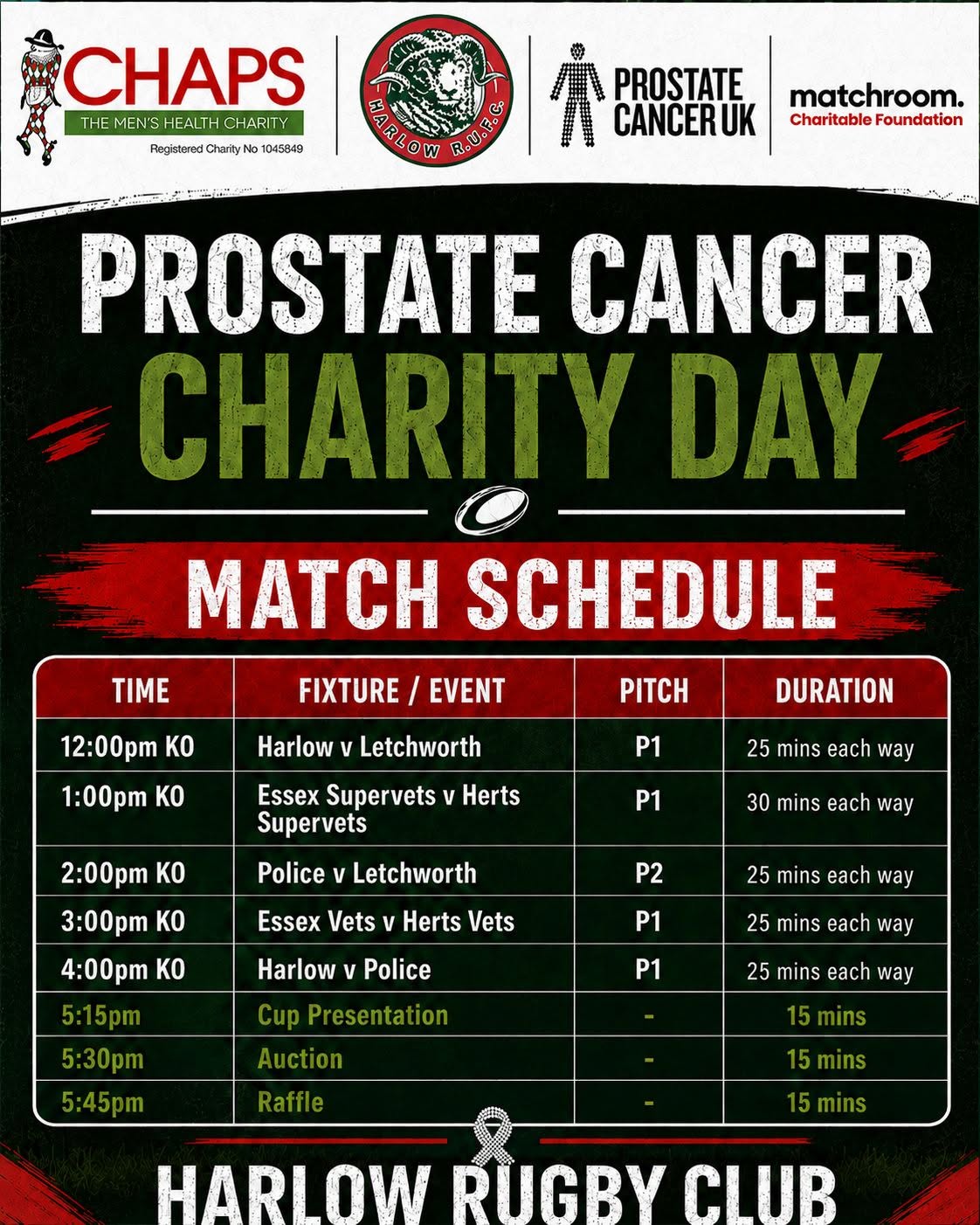
 England Rugby legend and World Cup winner Lawrence Dallaglio is once again showing his support for men’s health by having a PSA blood test at Harlow Rugby Club tomorrow (5th September), helping to raise awareness of prostate cancer and the importance of early detection.
His attendance at our “Rugby Against Prostate Cancer day” sends a powerful message to men across the rugby community: getting tested matters.
Prostate cancer is one of the most commonly diagnosed cancers in men, yet in its early stages it can develop without any obvious symptoms. A simple PSA blood test can help identify men who may require further investigation.
By stepping forward and being tested, Lawrence is helping to break down the reluctance that can sometimes prevent men from talking about their health or seeking a check-up.
Harlow Rugby Club is proud to be playing its part in encouraging those conversations and making testing more accessible to men within the club and wider community.
The rugby community has always been built around looking after your teammates, and today that extends far beyond the pitch. Checking in on your mates, talking openly about men’s health and encouraging each other to get tested could genuinely save a life.
Lawrence Dallaglio is leading the way again — this time for men, rugby and prostate cancer awareness.
Harlow Rugby Club continues to support prostate cancer awareness and fundraising, including the work of CHAPS Men’s Health Charity, Prostate Cancer UK and Professor Greg Shaw and his team at UCLH, whose research and pioneering surgical work is helping improve the diagnosis and treatment of prostate cancer.
The message is simple: Men — know your risk, have the conversation and get checked. It could save your life.
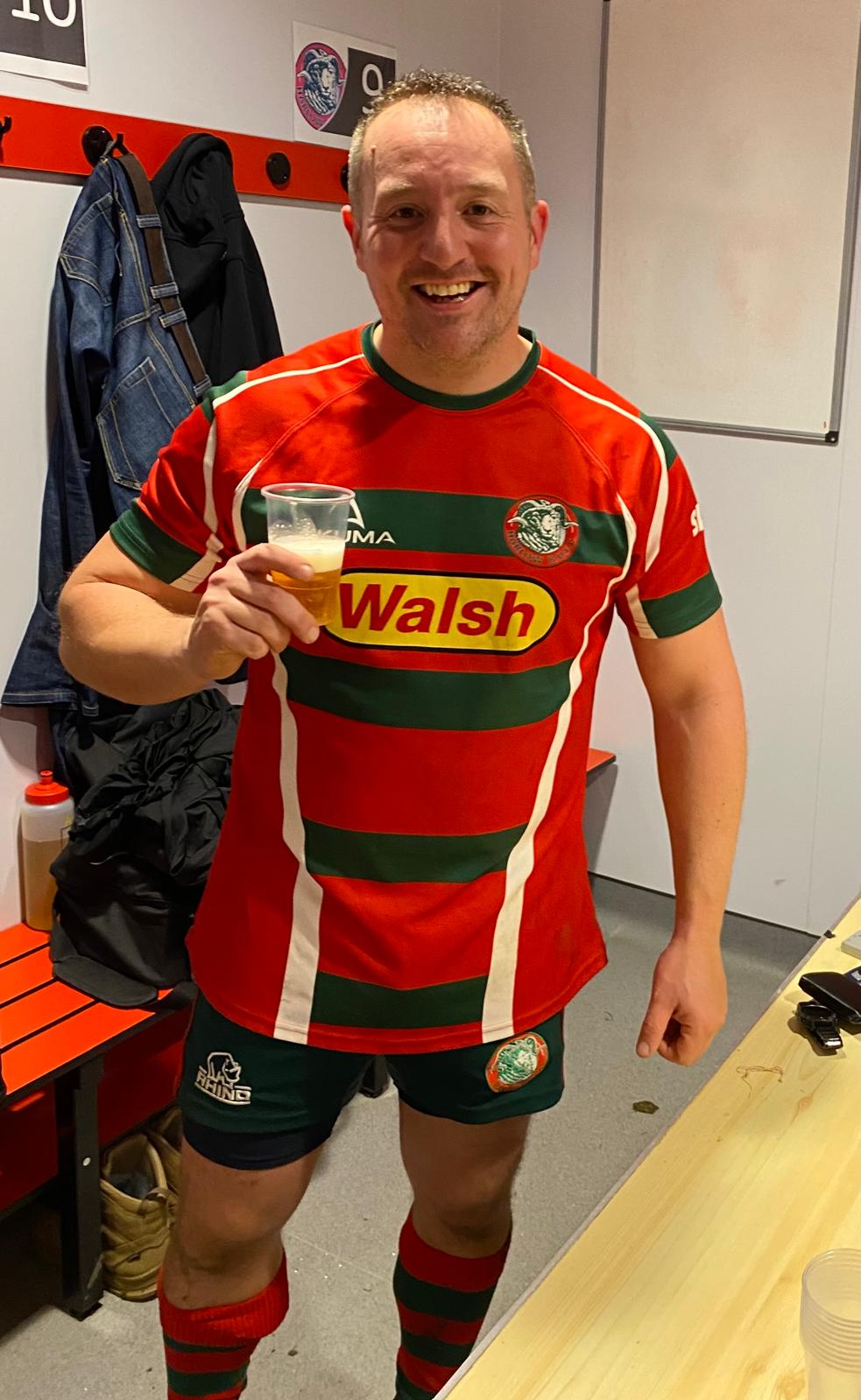
Why are we at Harlow Rugby Club Supporting Prostate Cancer – Ben White’s story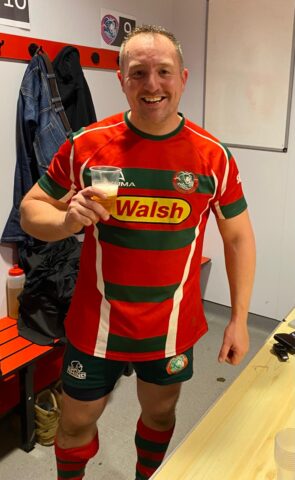
In November, after suffering from acute fatigue, Ben began to suspect that his testosterone levels might be low. He went to his GP, but initially there was a disagreement about what was causing his symptoms, as they felt that he may have been suffering from depression. However, he was convinced that something physical was wrong and made sure that he was given a testosterone test.
The first test showed that his testosterone was low, but not quite low enough to meet the threshold for treatment. Because He was still experiencing significant symptoms, he decided to pursue the matter privately. A second testosterone test again showed low levels, but once more they were not considered low enough for treatment.
He decided to persevere and underwent a third test. Fortunately, this result was low enough for me to move on to the next stage of assessment for testosterone replacement therapy. As part of that process, he had a full set of blood tests. It was during these tests that something completely unexpected was discovered: his PSA level was abnormal.
At that point, he returned to the NHS for further investigation. he subsequently underwent another six blood tests, all of which continued to show an abnormal PSA level.
In February, he had an MRI scan. This identified an area of concern within the central zone of his prostate. Fewer than 5% of prostate cancers are found in this area, but when cancer does occur there, it can be more aggressive.
He then underwent an invasive prostate biopsy. In March, his worst fears were confirmed: He had aggressive prostate cancer in the central zone of his prostate, and the tumour was abutting the seminal vesicle.
Because of the location and aggressive nature of the cancer, urgent surgery was required. The NHS booked him in for surgery in April and he had initially been told that the procedure would be nerve-sparing. However, on the day of his surgery, he was informed that they intended to remove approximately 50% of his nerves.
Faced with the potential long-term consequences of that decision, he declined the surgery and began looking for another option.
He discovered the NeuroSAFE procedure, which offered the possibility of removing the prostate while allowing the surgeon to assess the margins during the operation and preserve the nerves where it was safe to do so. At the time, this option was only available to him privately, at a cost of £25,000.
That was an enormous amount of money to find at very short notice. His colleagues and friends stepped in and organised a JustGiving fundraising page on his behalf. The response was extraordinary. Within just one week, the £25,000 target was reached, allowing me to undergo the private surgery.
He had his prostate removed using the NeuroSAFE procedure and achieved full nerve-sparing surgery. Following the operation, his surgical team were very confident that they had successfully removed all of the cancer. They could see just how close the cancer had come to breaking out of the prostate.
The timing of his diagnosis proved critical. Had he not continued pushing for answers when he first became unwell, the abnormal PSA might not have been discovered when it was. Had the cancer not been found and treated at that point, it would have continued to progress and he could ultimately have lost his life.
What began with unexplained fatigue and a determination to have his testosterone levels properly investigated ultimately led to the discovery of an aggressive cancer at a point when there was still an opportunity to treat it successfully.
Ben’s journey has taught him the importance of listening to your body, advocating for yourself when you know something is not right, and never being afraid to ask further questions or seek another opinion. It has also shown me the extraordinary generosity of friends, colleagues and others who came together when he needed them most. Without that persistence, support and generosity, his story could have had a very different ending.